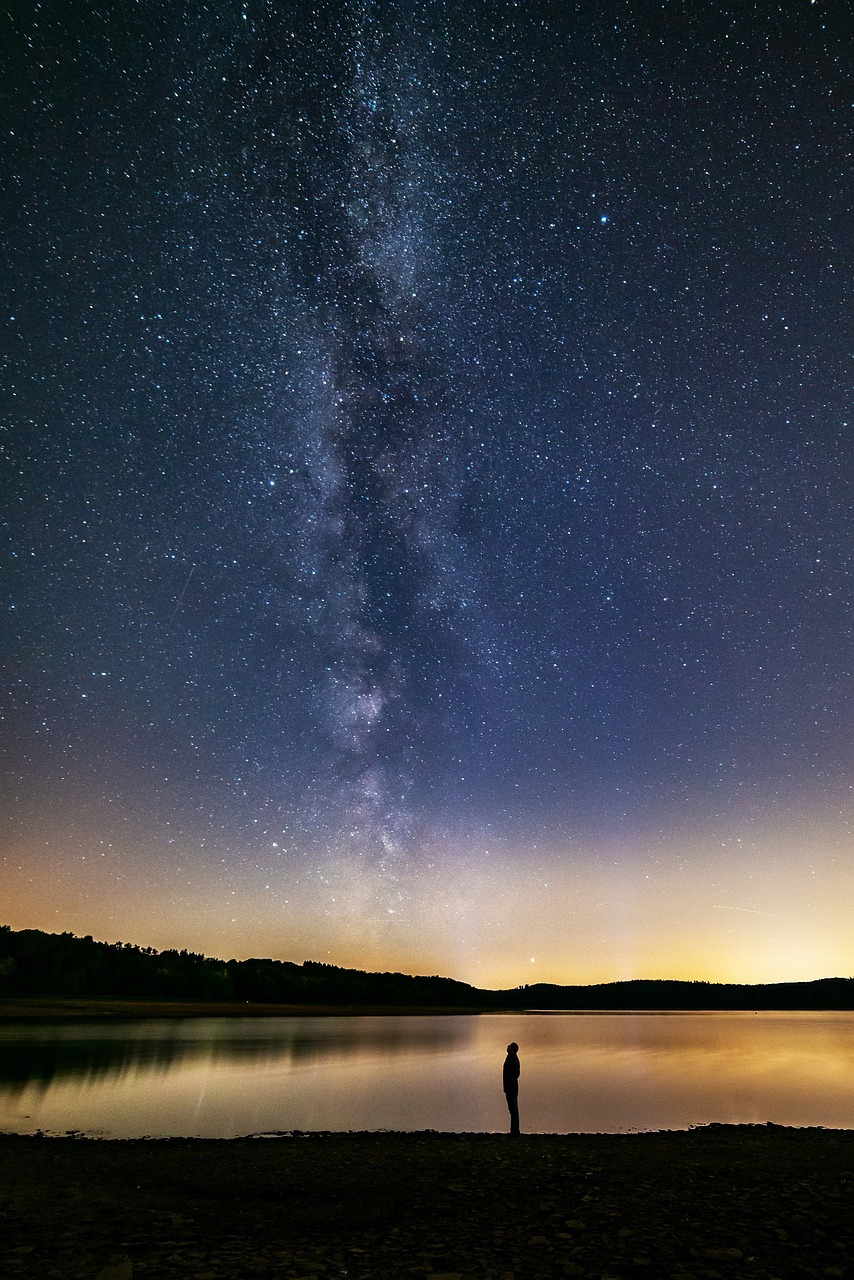
Tuesday, 25 July 2023

Lost in Space - Time [ Chapter 2 – Echoes of Home ]

Chapter 2 – Echoes of Home


With the discovery of the vortex, a renewed sense of purpose filled the team. They began working tirelessly to stabilize and control it. Robert used his engineering skills to upgrade their device, while Yuvraj dove deeper into quantum theories that might explain how they could manipulate The Nexus further.

However, as days turned into weeks, they realized that controlling the vortex was more challenging than anticipated. It flickered in and out of existence unpredictably, and attempts at entering resulted in dizzying disorientation or worse – temporary disappearance before being spat back out.

Despite these setbacks, hope remained steadfast within each member. They held onto each other’s strength during moments of despair; shared laughter over improvised meals prepared by Kalyani using alien flora; found solace in Radhika’s evening meditation sessions under ethereal nebulae skies.


One night around their fire pit under an array of dancing stars above them, Yogesh suggested sharing one memory from Earth every day – a small reminder why they were fighting so hard to return home.

“I remember my daughter’s first steps,” he started off with a soft smile playing on his lips as he stared into the flames. His words hung heavy in the air as silence fell upon them all – not uncomfortable but filled with longing for their own cherished memories waiting back home on Earth.


The Power of Unity
The daily sharing of memories from Earth became a cherished ritual. It was during these sessions that they realized the key to controlling The Nexus lay in their unity. They understood that the vortex appeared more stable when they were emotionally connected, focusing on a shared goal or memory.

Emboldened by this realization, they decided to conduct another experiment. This time, instead of focusing on just returning home, they would concentrate on a shared memory from Earth – Kalyani suggested remembering the feeling of rain since it was something everyone could relate to and had fond memories associated with.

Gathering around their device under an alien sky filled with radiant colors unseen by the human eye, Yogesh initiated countdown once again. As he reached zero, each member closed their eyes and focused intensely on the sensation of rain – its smell, sound, feel against skin.


Almost immediately, The Nexus responded; its energy patterns synchronized faster than before into rhythmic waves resembling rainfall. A vibrant vortex sprung forth from its center – not just any vortex but one radiating earthen hues mixed with soft blues reminiscent of rainy days back home.

Their hearts pounded in unison as rain started falling gently around them for the first time in this parallel universe – a sign that perhaps they were closer to finding their way back home after all!


A Taste of Hope

The rain was a miracle. It was the first time they’d experienced anything familiar in this alien universe and it sparked hope within them. They laughed, danced, and reveled in the rain, letting its cool droplets wash away their anxieties.

Later that night around their fire pit, as the last vestiges of rain pattered against the metallic surface of their spaceship-turned-home, they shared stories about rainy days back on Earth. Radhika spoke about her childhood memories of monsoon season in India; Robert reminisced about rainy camping trips with his family; Kalyani remembered studying under a blanket with hot cocoa during thunderstorms.


Despite being far from home and stranded in an unknown universe, for a moment there was warmth and camaraderie among them. The Nexus had responded to their unity and given them a taste of home – it felt like a victory.

However, amidst this newfound joy lingered an unspoken fear: what if this was just another anomaly? What if they couldn’t replicate this success? Their worries were valid but overshadowed by optimism. They decided to keep testing their theory over the next few days while enjoying these brief moments of respite.

As they went off to sleep that night inside their makeshift shelter amidst alien flora under an otherworldly sky filled with dancing nebulae above them – for once since arriving here – they all dreamed of Earth.


Nexus Experiment

The next few days were a flurry of activity. They repeated their experiment, focusing on different shared memories each time. Sometimes it was the taste of chocolate, other times the warmth of sunlight on their faces or the sound of waves crashing onto the shore.


Each successful attempt brought them closer to understanding The Nexus and its connection with collective consciousness. It became evident that unity wasn’t just about physical presence; it was about aligning their thoughts and emotions towards a common goal or memory.

However, they also realized that controlling The Nexus required extreme mental discipline. Stray thoughts could disrupt the stability of the vortex leading to unpredictable anomalies – like when Yuvraj accidentally thought about his pet dog and an alien creature resembling a canine materialized out of nowhere!


Despite these challenges, they felt hopeful. Their progress with The Nexus experiments had rekindled their spirits and strengthened their camaraderie.

One evening as they huddled around another makeshift fire pit under an alien sky swirling with vibrant colors, Yogesh broke the silence. “We’re getting closer,” he said looking at each one in turn before his gaze settled onto The Nexus pulsating gently nearby against backdrop of distant galaxies.

“We will get back home.”


 The Conscious Conundrum

The team’s research on the Nexus was progressing, but not without its fair share of challenges. They discovered that their individual subconscious fears and desires also influenced the Nexus, often manifesting in unpredictable ways.

One day, Devyani accidentally triggered a temporal anomaly when she subconsciously longed for her late father’s comforting presence. This resulted in an uncanny apparition resembling him appearing momentarily before dissolving into a cloud of stardust. The experience left them all shaken.


Realizing that they needed to control not just their conscious thoughts but also their subconscious ones, they decided to practice meditation and mindfulness techniques under Kalyani’s guidance who had studied ancient mind-control practices back on Earth.

Days turned into weeks as they grappled with controlling their minds while continuing to decipher the intricacies of the Nexus. There were moments of frustration and despair but each setback only strengthened their resolve.


As Chapter 2 draws to a close, our team is seen huddled together under an indigo sky filled with radiant celestial bodies unseen by human eyes back home. They sit in deep meditation around the pulsating Nexus which seems almost sentient now – responding subtly to their collective consciousness.

Despite being stranded light-years away from Earth amidst alien landscapes with no certainty about future or survival – there is unity among them; there is hope; there is resilience…and above all – there is determination to get back home.





Lost in Space - Time [ Chapter 1- Arrival at the Nexus ]

Lost in Space - Time

Chapter 1 – Arrival at the Nexus


Beneath prismatic skies swirling with colors unknown to earthly science text-books stood six earthlings staring at what seemed impossible yet was terrifyingly real before them. It was named ‘The Nexus’ by Yogesh because it appeared like no more than a shimmering bubble suspended in mid-air but was nothing less than a cosmic web connecting all points across space-time.
“Everything we’ve theorized about space-time…it’s right here,” he murmured.
Awe-struck silence fell over them until Radhika broke it.
“We need to understand how it works if we want any chance of getting back home.”
Therein began their journey into unraveling mysteries far beyond human comprehension inside this alien universe they found themselves lost within…


As they approached The Nexus, a sudden wave of energy radiated from it, causing their surroundings to ripple like water. It was as if reality itself was bending and warping around this cosmic hub.

“Be careful,” cautioned Yuvraj, his eyes never leaving the fluctuating energy field before them. “We don’t know how our presence might affect its stability.”

His warning came too late. Robert, driven by curiosity and reckless courage, reached out to touch The Nexus. Instantaneously, he was thrown back by an unseen force while a deafening silence filled the space.


“What just happened?” Devyani asked in disbelief as she helped Robert up.

“It reacted to human contact,” Radhika hypothesized. “It’s possible that it’s sensitive to our thoughts or emotions.”

Kalyani nodded in agreement. “This place…it’s alive in some way we can’t comprehend yet.”

Their awe turned into fear when they realized what this meant; their very thoughts could influence this world around them unpredictably.


“We need to gain control over ourselves first,” Yogesh suggested grimly. “Our subconscious fears and desires are being reflected onto reality here.”

The team agreed unanimously but with apprehension etched on their faces; they were not only dealing with an alien universe but also battling against the chaos within themselves.


Their first course of action was to establish a safe zone, an area where their thoughts and emotions would have minimal influence on The Nexus. Robert, still shaken from his encounter but eager to contribute, suggested they move away from the shimmering hub.

“Let’s set up camp a few miles out,” he proposed. “We can monitor The Nexus from a distance while we figure out how to control our subconscious.”


With that decided, they began moving away from the cosmic structure. As they retreated, Yogesh noticed something peculiar; The Nexus seemed less volatile as their distance increased.

“It seems we were right,” he mused aloud. “Our proximity does affect its stability.”


The team took this as a small victory in understanding this alien world better. Once settled in their makeshift camp under the radiant sky, Kalyani and Devyani started cataloguing everything about this universe – its unique flora and fauna, air composition and gravitational pull.


Meanwhile, Yuvraj and Radhika focused on deciphering the workings of The Nexus through observations made via advanced telescopic equipment salvaged from their lab back on Earth.

As night fell upon them – if it could be called night with no sun or moon but only galaxies casting ethereal light around – each member found themselves wrestling with inner fears and desires threatening to manifest into reality.

The team spent what seemed like days trying to understand and control their thoughts, practicing meditation techniques that Radhika had learned during her studies in India. They were making progress; The Nexus appeared less volatile, and they hadn’t experienced any more reality-bending incidents.

However, the strain of controlling their subconscious was taking a toll on them. Devyani, usually calm and composed, found herself snapping at Kalyani over a trivial disagreement about cataloguing an alien plant species. Yuvraj was becoming increasingly withdrawn, spending most of his time observing The Nexus silently.


“We’re all stressed,” Yogesh reminded everyone during one of their nightly meetings around a makeshift fire. “But we need to remember that we’re not just colleagues; we’re friends.”

His words resonated with the team as they shared stories from back home on Earth – families they missed, favorite foods they craved for – allowing themselves to feel nostalgia without fear or guilt.


They went to sleep that ‘night’ feeling closer than ever before despite being stranded in this alien universe. As each member drifted into slumber under the glow of distant galaxies above them, they felt an odd sense of peace amidst uncertainty.


As they began to understand their new environment, the team also started making strides in controlling their thoughts. Yogesh and Radhika developed a theory that The Nexus was not only influenced by subconscious fears and desires but also by conscious thoughts. They hypothesized that with enough concentration, they could manipulate The Nexus to create a portal back home.


To test this theory, they decided to conduct an experiment. Using Yuvraj’s knowledge of quantum mechanics and Robert’s expertise in astronautical engineering, they constructed a rudimentary device designed to amplify their collective consciousness towards The Nexus.


With everyone gathered around the device under the radiant alien sky, Yogesh initiated countdown. As he reached zero, each member focused intensely on their shared desire – returning home.

The Nexus responded almost immediately; its previously chaotic energy patterns started synchronizing into a harmonious rhythm resembling waves crashing against a shore. A vibrant vortex sprung forth from its center – it was not just any vortex but one with familiar earthly hues.

Their hearts pounded in unison as they beheld what seemed like a gateway back home. Despite being miles away from The Nexus, for that brief moment before sleep claimed them again under cosmic lights above, hope ignited within each heart – perhaps there indeed was a way back home after all!


Quantum Realm

The term "quantum realm" typically refers to a theoretical and abstract concept in the field of quantum mechanics, which is a branch of physics. Quantum mechanics deals with the behavior of particles at the atomic and subatomic scales, where classical physics no longer applies.


In this context, the quantum realm is a description of the smallest scales of the universe, where particles and energy behave in ways that are often counterintuitive to our everyday experiences. Some key aspects of the quantum realm include:

1. Superposition: Quantum particles, like electrons and photons, can exist in multiple states simultaneously. For example, an electron can be in multiple places at once until it is observed, and its wave function collapses to a specific location.

2. Entanglement: When two or more quantum particles become linked together, their states become correlated. Changing the state of one particle instantly affects the state of the other, regardless of the distance between them.


3. Uncertainty: The Heisenberg Uncertainty Principle states that it is impossible to simultaneously know both the position and momentum of a particle with absolute precision. The more precisely one property is measured, the less precisely the other can be known.

The quantum realm has many intriguing implications and potential applications, especially in fields like quantum computing, quantum cryptography, and quantum teleportation. However, it's essential to note that the term "quantum realm" has been popularized and sometimes used in a more imaginative or fictional sense in popular culture, particularly in movies and science fiction stories, where it might describe alternate dimensions or fantastical realms beyond our normal perception. These fictional representations often take significant creative liberties with the actual scientific concepts of quantum mechanics.

The Sturgeon Moon

The Sturgeon Moon is a term used to describe the full moon that occurs in August. It is one of the many traditional names given to full moons throughout the year by various cultures and Native American tribes.


The name "Sturgeon Moon" comes from the Great Lakes region of North America, where Native American tribes, particularly the Ojibwe, used the name to mark the time when sturgeon fish were more easily caught. The full moon in August coincided with the time when these large fish were abundant and actively swimming in the Great Lakes.


Each full moon of the year has different traditional names, often associated with seasonal events, agricultural cycles, or natural occurrences. Some other examples include the Wolf Moon in January, the Pink Moon in April, and the Harvest Moon in September.


It's important to note that these names may vary among different cultures and regions, but the term "Sturgeon Moon" specifically refers to the full moon in August and its association with the fishing season for sturgeon in the Great Lakes area.

Journey from MOONLIGHT RAYS to ELECTRICITY

Moonlight is just sunlight reflected off the moon, so it is possible to convert moonlight rays into an energy source. However, the amount of energy that can be collected from moonlight is very small. On a full moon, the light that reaches the earth is about 0.3% of what we experience during the day in direct sunlight. This means that a solar panel would only produce about 10 watts of power during a full moon.


There are a few ways to increase the amount of energy that can be collected from moonlight. One way is to use a concentrator, which is a device that focuses the moonlight onto a smaller area. This can increase the amount of power that can be collected by a factor of 100 or more.

Another way to increase the amount of energy that can be collected from moonlight is to use a thermal converter. A thermal converter uses the difference in temperature between the moonlight and the surrounding air to generate electricity. This is a more efficient way to collect energy from moonlight, but it requires a cold environment.


The technology for converting moonlight into energy is still in its early stages, but it has the potential to provide a reliable and renewable source of energy. In the future, it may be possible to use moonlight to power remote homes and businesses, or to provide light in areas where there is no access to electricity.

Here are some of the challenges that need to be addressed before moonlight can be used as a practical energy source:


The amount of energy that can be collected from moonlight is very small. The technology for converting moonlight into energy is still in its early stages. The cost of collecting and converting moonlight energy is currently high. 

Despite these challenges, there is a lot of potential for using moonlight as an energy source. As the technology continues to develop, it is likely that the cost of collecting and converting moonlight energy will decrease. This could make moonlight a viable option for providing energy in remote areas or for powering small devices.


Monday, 24 July 2023

Neutrinos and Light Theory

Neutrinos and the theory of light are two separate concepts in physics, but they are related in some ways. Let's discuss both of them individually:


1. Theory of Light (Electromagnetic Theory of Light):
The theory of light is a fundamental aspect of physics that deals with understanding the nature and behavior of light. In the context of classical physics, light is described as an electromagnetic wave, which means it is composed of electric and magnetic fields oscillating perpendicular to each other and propagating through space at the speed of light (approximately 299,792 kilometers per second in a vacuum). This theory was developed by James Clerk Maxwell in the 19th century and is known as Maxwell's equations.

According to this theory, light exhibits various phenomena, including reflection, refraction, diffraction, interference, and polarization. It forms the basis for understanding optics, which is the branch of physics that deals with the study of light and its interactions with matter.


2. Neutrinos:
Neutrinos are elementary particles that belong to the lepton family, which also includes electrons and muons. They are very lightweight and electrically neutral, which means they don't carry any electric charge. Neutrinos interact very weakly with other matter, making them difficult to detect, and they can travel through vast distances without being significantly affected by electromagnetic forces.

Neutrinos were first proposed by Wolfgang Pauli in 1930 as a solution to a puzzle related to beta decay, a nuclear process where a neutron transforms into a proton, emitting an electron (beta particle) and an antineutrino. Later, it was discovered that there are three types, or flavors, of neutrinos: electron neutrino, muon neutrino, and tau neutrino.


The study of neutrinos falls within the realm of particle physics and astrophysics. Neutrinos are produced in various processes, such as nuclear reactions in the Sun, supernovae explosions, and cosmic ray interactions with the Earth's atmosphere. Detecting neutrinos is challenging due to their weak interactions, but they provide essential information about astrophysical phenomena and fundamental particle interactions.

Connection:
The connection between neutrinos and the theory of light is that both are fundamental aspects of particle physics and quantum mechanics. While light is composed of photons, which are elementary particles carrying electromagnetic energy, neutrinos are separate elementary particles with different properties. In the context of quantum field theory, electromagnetic interactions and weak interactions (responsible for neutrino interactions) are described by different gauge bosons: photons for electromagnetic interactions and W and Z bosons for weak interactions.


Overall, neutrinos and the theory of light are distinct topics in physics, each with its own unique properties and implications, but they both contribute to our understanding of the fundamental nature of particles and their interactions.

Saturday, 22 July 2023

Galaxies

Certainly! There are countless galaxies in the universe, but here are some of the most well-known and notable ones:

1. Milky Way Galaxy: This is the galaxy in which our Solar System is located. It is a barred spiral galaxy and is home to billions of stars, including our Sun.


2. Andromeda Galaxy (M31): The Andromeda Galaxy is the nearest major galaxy to the Milky Way and is also a spiral galaxy. It can be seen with the naked eye from Earth.

3. Triangulum Galaxy (M33): Also known as the Pinwheel Galaxy, it is another nearby spiral galaxy and a member of the Local Group, along with the Milky Way and Andromeda galaxies.

4. Sombrero Galaxy (M104): This is a stunning galaxy seen edge-on, and it gets its name from its resemblance to a wide-brimmed hat or sombrero.


5. Whirlpool Galaxy (M51): A beautiful example of a grand-design spiral galaxy, M51 is interacting with a smaller companion galaxy, creating the spiral arms.

6. Centaurus A (NGC 5128): An elliptical galaxy with a prominent dust lane across its center, giving it a distinctive appearance.

7. Black Eye Galaxy (M64): Another striking spiral galaxy with a dark, absorbing band of dust in front of its bright nucleus.

8. Bode's Galaxy (M81): A grand spiral galaxy located in the constellation Ursa Major.

9. Cigar Galaxy (M82): A nearby starburst galaxy with intense star-forming activity and noticeable plumes of gas and dust.

10. Leo Triplet (M66, M65, NGC 3628): This is a group of three galaxies in the constellation Leo that are relatively close to each other in the sky.


11. Sculptor Galaxy (NGC 253): A bright and large spiral galaxy located in the Sculptor constellation.

12. Whirlpool Galaxy (NGC 5194): Another galaxy with the same common name as M51, but this one is located in the constellation Canes Venatici.

Please note that there are many more galaxies out there, each with its own unique characteristics and features. Scientists continue to discover and study new galaxies to expand our understanding of the vast cosmos.

Top 20 Profitable Agribusiness Startup Ideas in India 2025 - Complete Entrepreneurship Guide

Image: Modern Agriculture & Agribusiness Opportunities in India 🌾 India's agriculture sector contributes over 18% to G...

Popular Blogs