Saturday, 10 June 2023

Contraindications of Dhanurasana

While Dhanurasana (Bow Pose) can be beneficial for many individuals, there are certain contraindications and precautions to be aware of. It is important to exercise caution and consult with a qualified yoga instructor or healthcare professional if you have any of the following conditions:

1. High or low blood pressure: Dhanurasana can increase blood flow and exert pressure on the abdominal area, which may not be suitable for individuals with uncontrolled high blood pressure or extremely low blood pressure. It is advisable to modify or avoid the pose in such cases.

2. Hernia: If you have a hernia, particularly in the abdominal or inguinal region, Dhanurasana may place excessive strain on the affected area and potentially worsen the condition. It is best to avoid this pose if you have a hernia.

3. Recent abdominal surgery: Individuals who have undergone recent abdominal surgery, such as hernia repair or abdominal organ surgery, should avoid Dhanurasana until they have fully healed and received clearance from their healthcare provider.


4. Neck or back injuries: Dhanurasana involves a backbend, which can place strain on the neck and back. If you have a recent or chronic injury to the neck or back, it is advisable to avoid or modify this pose to avoid exacerbating the condition.

5. Pregnancy: Pregnant individuals should approach Dhanurasana with caution. As the pose involves strong backbending and pressure on the abdomen, it may not be suitable for all stages of pregnancy. It is best to consult with a prenatal yoga instructor or healthcare professional for guidance on safe modifications.

6. Carpal tunnel syndrome: The grip required in Dhanurasana can put pressure on the wrists, which may exacerbate symptoms of carpal tunnel syndrome. Individuals with this condition should be cautious and modify the pose or avoid it altogether.

Always listen to your body and practice within your limits. If you have any concerns or medical conditions, it is advisable to seek guidance from a healthcare professional or an experienced yoga instructor who can provide personalized advice based on your specific needs.

Mobility exercises of Dhanurasana

For more information click here


Dhanurasana, also known as Bow Pose, is a yoga posture that stretches and strengthens various muscles of the body, particularly the back, shoulders, chest, and thighs. While it is primarily considered a static pose, there are some mobility exercises you can incorporate to enhance your practice. Here are a few mobility exercises for Dhanurasana:

1. Half Bow Lifts: Lie on your belly with your arms extended alongside your body. Bend your right knee and reach back with your right hand to hold onto the ankle. Inhale and lift your right foot and thigh, raising your head, chest, and left arm off the ground. Hold for a few breaths, then exhale to release. Repeat on the other side.

2. Mini-Bow Rocks: Lie on your belly with your arms extended forward. Bend both knees and reach back with your hands to hold onto your ankles. Inhale as you lift your head, chest, and thighs off the ground, rocking forward and backward like a rocking chair. Keep the movement gentle and controlled, using your breath to guide you.


3. Dynamic Leg Kicks: Start in a standing position with your feet hip-width apart. Bend forward from the hips and reach your hands towards the ground. Shift your weight onto your right foot and lift your left leg behind you, keeping it straight. Swing your left leg forward, then kick it back as high as you comfortably can. Repeat this swinging motion 5-10 times, then switch sides.

4. Bow Rolls: Lie on your belly with your arms extended alongside your body. Bend your knees and reach back with your hands to hold onto your ankles. Inhale and lift your head, chest, thighs, and shins off the ground. As you exhale, roll to the right side, balancing on your right hip and shoulder. Inhale to return to the center, and then exhale to roll to the left side. Continue rolling side to side for a few rounds.

Remember to warm up your body with some gentle stretches before attempting these mobility exercises. Listen to your body, go at your own pace, and modify the movements as needed to suit your flexibility and comfort levels. If you have any concerns or pre-existing conditions, it's always a good idea to consult with a qualified yoga instructor or healthcare professional before trying new exercises.


Introduction to Dhanurasana

Dhanurasana, commonly known as the Bow Pose, is a dynamic and energizing yoga asana that resembles the shape of a bow. In Sanskrit, "Dhanu" translates to "bow," and "Asana" means "pose" or "posture." Dhanurasana is a backbend that engages the entire body, providing a range of physical and mental benefits.

To practice Dhanurasana:

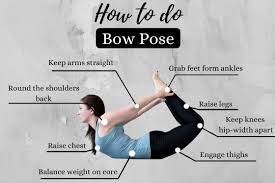
1. Lie flat on your stomach with your legs hip-width apart and your arms alongside your body.
2. Bend your knees and bring your heels towards your buttocks, allowing your feet to lift off the floor.
3. Reach back with your hands and grab hold of your ankles or feet. Ensure your fingers wrap around the outside of your ankles.
4. Take a deep breath in, and as you exhale, begin to lift your chest, head, and thighs off the mat. This action will simultaneously pull your feet upward, creating a bow-like shape with your body.
5. Maintain the pose for several breaths, breathing deeply and evenly. Keep your gaze forward and try to relax your facial muscles.
6. To release, gently exhale and slowly lower your chest, head, and thighs back down to the mat. Release your hold on your ankles or feet and rest in a comfortable position, such as Child's Pose.

Benefits of Dhanurasana:

1. Spinal Flexibility: Dhanurasana deeply stretches and strengthens the entire spine, improving its flexibility and mobility. It helps counteract the effects of prolonged sitting and promotes a healthy, supple back.

2. Core Strengthening: The act of balancing on the abdomen while in Dhanurasana engages and strengthens the core muscles, including the abdominal and back muscles. This can contribute to improved posture and stability.


3. Stimulates Digestion: Dhanurasana massages the abdominal organs, promoting digestion and aiding in the proper functioning of the digestive system. It can be beneficial for individuals with sluggish digestion or constipation.

4. Opens the Chest and Shoulders: This pose opens and expands the chest, stretching the muscles of the chest and shoulders. It enhances lung capacity and can help alleviate respiratory issues like asthma.

5. Strengthens the Legs and Glutes: The effort required to lift and hold the legs in Dhanurasana strengthens the muscles of the thighs and buttocks. It can be a beneficial pose for toning the lower body.

6. Energetic and Emotional Balance: Dhanurasana is invigorating and energizing, stimulating the nervous system and boosting overall vitality. It is also believed to help release tension and stress, promoting emotional well-being.

As with any yoga asana, it is important to practice Dhanurasana with proper alignment and within your comfort level. If you have any existing injuries, medical conditions, or concerns, it's recommended to consult with a qualified yoga instructor or healthcare professional before attempting Dhanurasana or any other yoga pose. They can provide guidance and modifications tailored to your specific needs.

Contraindications of Makarasana

While Makarasana (Crocodile Pose) is generally considered a gentle and safe yoga pose, there are certain contraindications and precautions to keep in mind. Here are some situations in which it is advised to avoid or modify Makarasana:

1. Pregnancy: Makarasana may not be suitable for pregnant women, especially during the later stages of pregnancy. It's important to consult with a healthcare provider or a qualified prenatal yoga instructor for guidance on safe modifications or alternative poses.

2. Recent Abdominal Surgery: Individuals who have undergone recent abdominal surgery, such as hernia repair or cesarean section, should avoid or modify Makarasana as it involves placing pressure on the abdomen.

3. High Blood Pressure: Makarasana can promote relaxation and slow down the heart rate. However, if you have uncontrolled high blood pressure, it is advisable to avoid this pose or practice it under the guidance of a knowledgeable instructor who can provide appropriate modifications.


4. Neck or Spine Injuries: People with acute or severe neck or spine injuries should avoid Makarasana or perform it with caution and guidance from a healthcare professional or experienced yoga instructor. It's important to avoid any strain or discomfort in these areas.

5. Knee or Ankle Injuries: If you have an acute or chronic knee or ankle injury, you may need to modify Makarasana by using additional props, such as blankets or bolsters, to provide support and reduce strain on the affected joint.

6. Diarrhea or Digestive Issues: Makarasana involves gentle pressure on the abdomen, which may not be suitable for individuals experiencing diarrhea or other acute digestive issues. It is advisable to avoid the pose until the symptoms subside.

Always listen to your body and practice within your comfort zone. If you have any specific health concerns or medical conditions, it's recommended to consult with a healthcare professional or a qualified yoga instructor before attempting Makarasana or any other yoga pose. They can provide personalized guidance and modifications based on your individual needs.

Benefits of Makarasana

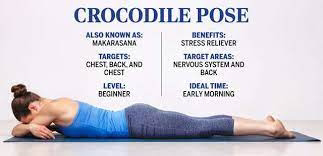
Makarasana, or the Crocodile Pose, offers several benefits for the body and mind. Here are some of the key benefits of practicing Makarasana:

1. Relaxation and Stress Relief: Makarasana is a deeply relaxing pose that helps calm the nervous system and promote overall relaxation. It can be particularly beneficial for reducing stress, anxiety, and fatigue.

2. Spinal Alignment and Posture Improvement: Makarasana gently stretches and lengthens the spine, helping to improve spinal alignment and posture. It can be especially helpful for those who spend long hours sitting or have sedentary lifestyles.

3. Lower Back Pain Relief: This pose targets the muscles in the lower back, providing relief from tension and discomfort. It helps to release tightness in the muscles and promotes flexibility and mobility in the lumbar region.

4. Hip Opening: Makarasana gently opens the hips, which can be beneficial for individuals who have tight hip muscles due to prolonged sitting or physical activities. It helps to increase flexibility and range of motion in the hips.

5. Shoulder and Chest Opening: The arms and shoulders are stretched and relaxed in Makarasana, which can help relieve tension and tightness in the chest and shoulder area. It promotes better posture and can alleviate discomfort caused by hunching or slouching.


6. Deep Breathing and Lung Expansion: While in Makarasana, the chest remains open, allowing for deep and unrestricted breathing. This can enhance lung capacity, oxygenation, and overall respiratory function.

7. Restoration of Energy and Vitality: Makarasana is known to be a rejuvenating pose that helps restore energy levels and promote a sense of well-being. It allows the body to enter a state of deep relaxation and rejuvenation.

8. Mind-Body Connection: Makarasana encourages mindful awareness and the connection between the body and the mind. The stillness and relaxation of the pose can help bring about a sense of tranquility and inner peace.

As with any yoga practice, it's important to approach Makarasana with proper alignment and listen to your body's limitations. If you have any specific health concerns or injuries, it's recommended to consult with a qualified yoga instructor or healthcare professional before practicing Makarasana or any other yoga pose.

Mobility Exercises of Makarasana

Makarasana, also known as the Crocodile Pose, is a yoga asana that primarily targets the lower back, hips, and shoulders. While it is not a highly dynamic pose, there are a few mobility exercises that can be done to enhance the benefits of Makarasana and improve flexibility and range of motion. Here are some mobility exercises you can incorporate into your Makarasana practice:

1. Shoulder Rolls: Sit in Makarasana with your hands placed on the mat in front of you. Begin by rolling your shoulders forward in a circular motion, gradually increasing the size of the circles. After a few rotations, reverse the direction and roll your shoulders backward. This exercise helps to release tension and increase mobility in the shoulder joints.

2. Cat-Cow Stretch: Come onto all fours with your wrists directly under your shoulders and your knees hip-width apart. Inhale, arch your back, and lift your chest and tailbone towards the ceiling (Cow Pose). Exhale, round your back, and tuck your chin towards your chest (Cat Pose). Repeat this fluid movement several times, synchronizing the breath with the movement. This exercise helps to warm up the spine and increase flexibility.


3. Knee-to-Chest Stretch: Lie on your back in Makarasana. Take a deep breath in and as you exhale, draw one knee towards your chest and hug it with both hands. Hold the stretch for a few breaths, feeling the gentle release in your lower back and hip. Repeat with the other knee. This exercise helps to release tension in the lower back and improve hip mobility.

4. Pelvic Tilts: Lie on your back in Makarasana with your feet flat on the mat, hip-width apart. Inhale deeply, and as you exhale, tilt your pelvis backward, pressing your lower back into the mat. Inhale again and tilt your pelvis forward, arching your lower back slightly. Continue this rocking motion, syncing it with your breath. Pelvic tilts help to mobilize the lower back and improve pelvic alignment.

5. Supine Spinal Twist: Lie on your back in Makarasana. Extend your arms out to the sides in a T position. Bend your knees and drop them to one side, while keeping your upper back and shoulders grounded. Hold the twist for a few breaths, feeling the gentle stretch in your spine. Repeat on the other side. This exercise helps to release tension in the back and improve spinal mobility.

Remember to listen to your body and not push beyond your limits. It's always advisable to practice under the guidance of a qualified yoga instructor, especially if you're new to yoga or have any specific health concerns.

Introduction to Makarasana

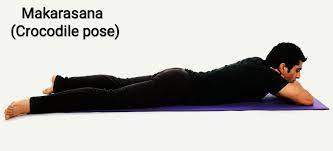
Makarasana, also known as Crocodile Pose or Makara Mudra, is a yoga asana (posture) that derives its name from the Sanskrit word "makara," which means crocodile. In this pose, the body resembles a resting crocodile, hence the name. Makarasana is often practiced as a relaxation pose or as a counterpose to more active and challenging yoga postures.

To practice Makarasana, follow these steps:


1. Lie on your stomach with your legs extended and your feet hip-width apart.
2. Place your forearms on the mat, with your elbows directly under your shoulders, and your palms facing down.
3. Relax your forehead on your folded hands, allowing your neck to be in a neutral position.
4. Keep your legs extended and relax them, allowing your feet to naturally fall outward.
5. Close your eyes and breathe deeply, focusing on relaxing your entire body.
6. As you inhale, feel your belly pressing against the mat, allowing your breath to expand your abdomen.
7. As you exhale, let go of any tension in your body, sinking deeper into relaxation.
8. Stay in the pose for 5 to 10 minutes, or as long as feels comfortable and relaxing.


Makarasana is known for its calming and restorative effects. It helps release tension in the back, shoulders, and neck, promoting relaxation and reducing stress. This pose can also be beneficial for people experiencing lower back pain or discomfort. Additionally, Makarasana gently stretches the chest and abdomen, promoting deep diaphragmatic breathing.

As with any yoga practice, it's essential to listen to your body and not force yourself into any position that causes pain or discomfort. If you have any existing medical conditions or injuries, it's advisable to consult with a qualified yoga instructor or healthcare professional before attempting Makarasana or any other yoga posture.

Top 20 Profitable Agribusiness Startup Ideas in India 2025 - Complete Entrepreneurship Guide

Image: Modern Agriculture & Agribusiness Opportunities in India 🌾 India's agriculture sector contributes over 18% to G...

Popular Blogs